Fear of God Essentials Graphic Check: Flat vs Raised Print
Inside this note
Before buying these Fear of God Essentials black sweatpants, the first thing to confirm is not the size, but what the product page means by "print" and whether the seller can provide fabric weight and QC photos corresponding to the current batch. The existing page information is enough to establish a verification order, but not enough to directly prove authenticity or 380gsm fabric, so it's recommended to judge the graphic, fabric, and sizing evidence separately. 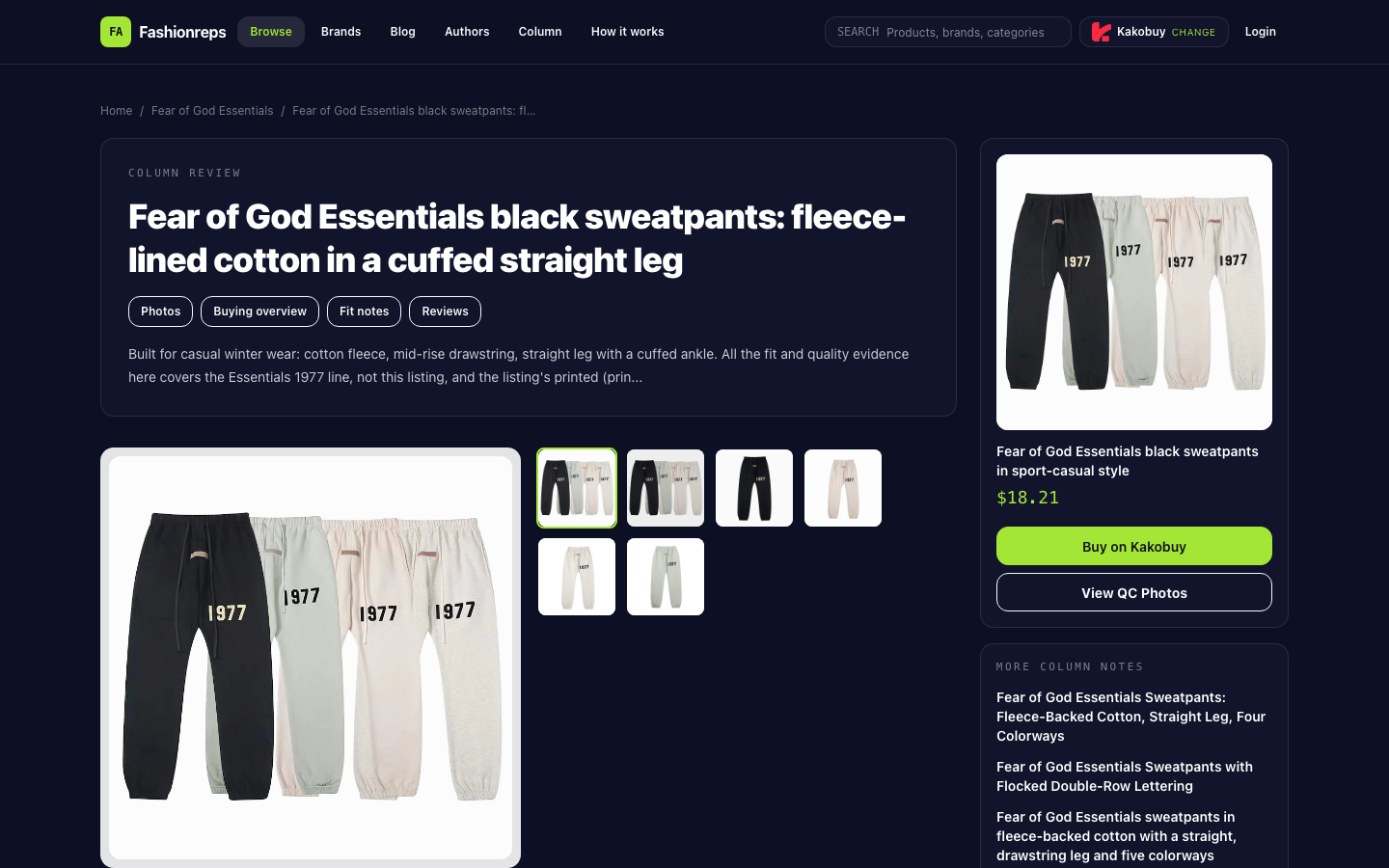
Before buying these Fear of God Essentials black sweatpants, the first thing to confirm is not the size, but what the product page means by "print" and whether the seller can provide fabric weight and QC photos corresponding to the current batch. The existing page information is enough to establish a verification order, but not enough to directly prove authenticity or 380gsm fabric, so it's recommended to judge the graphic, fabric, and sizing evidence separately.

Distinguish Three Types of Evidence First
The product page clearly describes the black sweatpants as made of cotton fleece fabric, with a mid-rise drawstring, straight legs, and ribbed cuffs; it also describes the 1977 graphic as a print. The page lists colors including black, beige, gray, and green, sizes ranging from S to XL, and notes a measurement error of 1–3 cm.
These are direct descriptions from the product page, but they are not independent verification of the actual item. The page does not provide fabric weight or close-up photos sufficient to confirm the graphic's surface structure.
The second type is reference clues for the Essentials 1977 series. Relevant authentication discussions typically regard a raised, fleece-textured 1977 graphic as an important observation point, and consider flat printing to conflict with this reference feature. This clue can help buyers ask questions, but it cannot replace QC photos of the actual item or determine authenticity based solely on graphic form.
The third type is editorial judgment: when the product page says "print" but reference materials emphasize a raised fleece surface, the safest conclusion is not to directly judge the item as problematic, but to pause the order and first ask the seller for additional close-up photos and fabric weight information.
First Check: Request Close-up Photos of the Graphic
First ask the seller to provide close-up photos of the 1977 graphic, ideally including the following angles:
- Flat front shot to confirm the overall outline and arrangement of the graphic.
- Side-lit photo to observe whether the graphic has obvious raised texture, fleece, or shadow changes.
- Edge close-up to see if the boundary between the graphic and the fabric is flat, lifting, or has glue overflow.
- Actual photos on black fabric, avoiding only compressed or mock-up display images.
- Photos showing both the pant body and the graphic to confirm they correspond to the current style, not other colors or batches from the same series.
If the seller can only repeat the product page's flat images and cannot provide actual close-ups, you can only confirm that "the page claims a graphic exists", but cannot confirm whether the graphic is flat print or raised fleece, nor whether the images match the item to be shipped.
Note that a graphic appearing to have shadows does not automatically mean it is raised; lighting direction, image sharpening, and compression can create similar effects. Conversely, a single front photo not showing raised texture cannot alone prove it is flat print. Judgment should be based on multi-angle, close-up photos.
Second Check: Ask for Fabric Weight Instead of Replacing It with Thickness Estimates
The page states the fabric is cotton fleece, but does not provide weight. Reference materials have mentioned a claim of 380gsm or above for authentic fleece fabric of the 1977 series, but this is a reference standard at the series level, not evidence that the current item has achieved that weight.
When asking the seller, directly request the following information:
- What is the fabric weight, and is the unit gsm?
- Does the weight refer to the finished garment, fabric per square meter, or the seller's own estimate?
- Does the black color use the same fabric as the other colors?
- Can they provide weighing or fabric label photos?
- Does "fleece" on the page specifically mean brushed interior, or just ordinary cotton fabric?
If the seller only answers "very thick", "lined", "enough for winter", these are subjective descriptions and cannot replace weight data. Without weight, you can continue evaluating the cut and construction, but do not treat this item as a confirmed heavy 380gsm option.
Third Check: Put Waistband, Cuffs, and Size QC in the Same Evidence Chain
After supplementing graphic and fabric evidence, then check QC photos for the target size. The focus is not just the size label, but confirming whether actual measurements match the seller's size chart.
Suggest asking the seller to photograph or measure:
- Waist laid flat, and the states with drawstring fully relaxed and tightened.
- Hip and thigh circumference, especially for buyers with wider hips or thighs.
- Outseam and inseam, to confirm the stacking effect before and after the cuff.
- Width and stitching of the ribbed cuffs, checking left-right consistency.
- Size label, main label, and overall garment photos to confirm they belong to the same item.
Existing reference information suggests this series has a mid-rise fit with relatively roomy hips and legs, and the length may run long; those wanting a slimmer fit might consider sizing down, while those with wider hips or thighs might need to size up. But these are series-level references and cannot replace the size chart for this listing. The product page notes a 1–3 cm measurement error, so compare with your own sweatpants' laid-flat measurements rather than ordering based only on your usual letter size.
How to Handle Conflicting Information
You can make decisions in the following order:
- The product page says the graphic is printed, but the seller's close-up photos show obvious raised fleece. Record both descriptions and continue checking batch, details, and fabric data; do not confirm authenticity based on one piece of evidence alone.
- The product page says the graphic is printed, and the seller can only provide flat images. The graphic process cannot be further confirmed; it is recommended to pause the order.
- The seller claims heavy fabric, but cannot provide gsm or any verifiable weight information. Treat the weight as unknown; do not make a purchase decision based on 380gsm.
- Graphic photos, fabric description, and size QC photos come from different items or colors. The evidence chain is incomplete; request corresponding photos of the current black color and target size.
- All information comes from the product description, lacking actual QC photos. You can confirm what the page says, but cannot confirm the graphic process, fabric weight, or authenticity.
Stop Conditions Before Ordering
If any of the following occurs, it is not recommended to treat this as a verified purchase option:
- The seller refuses to provide graphic close-ups, or the photos are clearly not of the current black color.
- The descriptions of "print" and "raised fleece" conflict, but no side-lit or edge photos are available to help judge.
- The seller uses adjectives like "thick" or "heavy" instead of fabric weight, with no verifiable data.
- The target size lacks waist, hip, length, or cuff QC information.
- The purchase decision relies on series authentication discussions, but the current item itself lacks corresponding physical evidence.
The conclusion supported by existing materials is: this product page describes a black, cotton fleece, mid-rise drawstring, straight-leg with ribbed cuffs sweatpants, and describes the 1977 graphic as a print; but whether the graphic is flat print or has a raised fleece surface, and whether the fabric reaches 380gsm or above, the page itself does not prove. Until the three pieces of evidence—graphic close-ups, fabric weight, and target size QC—are complete, pausing the order is safer than buying based on series impressions.
Sources and Limitations
The product facts used in this article come from the Fashionreps Fear of God Essentials black sweatpants product page and the series reference information it compiles. The source also indicates that some fit and quality judgments cover the Essentials 1977 series, not necessarily corresponding to the current link; the page also does not provide fabric weight for the current item. Therefore, this article does not write series reference clues as confirmed attributes of the current item, nor does it use them to confirm authenticity or guarantee purchase results.
Community feedback
5 approved
Reader score 3.4 / 5 (5 ratings)