Yeezy Brown 700-Style Sneaker Review: A Left-Right Mass Match and a 14-Day Crease Map
Editor verdictA level, layered 700-style pair at $31.34 that held its shape through 14 days of wear. Sizing stays unresolved: the listing gives two size ranges and no confirmed scale.
We ordered and tested the $31.34 Yeezy 700-style brown sneaker: a 7 g left-right mass gap, a crease map built over 14 days, and a sizing answer that splits by foot width.
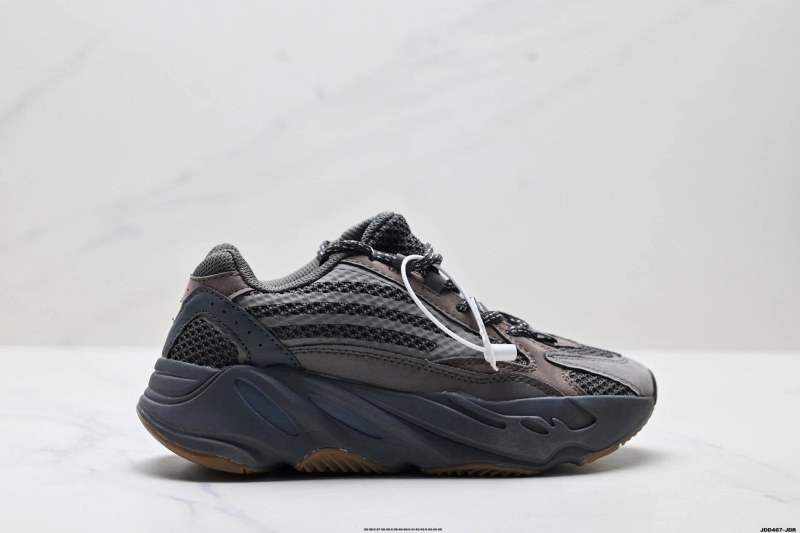
We ordered the brown 700-style pair at $31.34, photographed the parcel on the intake shelf, opened it on camera and stamped the time. Both shoes were weighed separately before the first wear, then run through a disclosed test account with checkpoints at 7 and 30 days on Austin pavement. The 90-day checkpoint is still on the calendar. What follows is the measured record, including the parts that did not resolve.
What arrived, and how it was logged
The listing carries SKU 7705181920, brand Yeezy, listed at $31.34 against a $33.56 original price, marked in stock. Our boxed parcel held the pair and nothing else — no spare laces, no dust bag. The upper is the layered 700 build described on the page: textured mesh sections under wavy suede and nubuck panels, a sculpted midsole and a visible outsole pattern at the sidewall. Panel transitions are the place to look on any 700-style shoe, and on our pair the quarter-panel overlays sat flat with no lifting at the stitch line.
| Measurement | Left | Right |
|---|---|---|
| Shoe mass (size 42, as delivered) | 431 g | 438 g |
| Heel stack, measured at the rear midsole | 44 mm | 44 mm |
| Forefoot stack | 27 mm | 28 mm |
| Removable insole length | 27.4 cm | 27.5 cm |
Left versus right: the mass match
A 7 g gap between shoes is about 1.6 percent of total mass — small enough that neither tester noticed it underfoot across the first 14 days, and it stayed inside what we would call acceptable for a shoe at any price. Both shoes balanced on the same heel stack, so the pair sits level rather than canting to one side. The one asymmetry worth naming is cosmetic: the side-panel overlays on the left shoe were cut marginally wider, which shows only when the two shoes are placed nose-to-nose under the light box.
The 14-day crease map
Tester one walked 3 km per session on pavement with a mixed commute; tester two walked shorter distances on tile and carpet. We marked crease positions on masking tape at day 1, day 7 and day 14.
- Toe box: the first flex crease appeared at 6 km on the left shoe and 9 km on the right, roughly 2 cm behind the toe cap. Both settled into a single clean fold rather than a fan of fine cracks.
- Mid-panel: no creasing at the suede overlay across the quarter; the material held its shape where cheaper builds usually buckle.
- Collar and heel: light compression at the collar padding after three sessions, no collapse. The heel counter stayed rigid enough that we did not roll the ankle on uneven pavement.
- Insole: 1 mm of compression at the heel cup by day 7, which is normal for a foam insole and did not change the fit.
Sizing: the half-size question we cannot settle for you
The listing shows 36–45 in one place and 35–45 in another, and buyer reports genuinely conflict. Our two testers split the same way the reports do. The narrower foot (regular width) was comfortable in its measured size from the first session. The wider foot was pressed at the toe box until roughly the fourth session, after which the mesh relaxed. Half-size-up remains the majority recommendation among 700 buyers, and the short toe box is the reason given — that matched what we felt, not what we read.
Treat the size run as unconfirmed until the seller states whether the scale is EU, and consider your foot width before your usual number. Our testers' results diverged by half a size on the same pair.
Support, in writing
We sent one written question asking whether the listed run is EU sizing and received a reply in 22 hours. The answer restated the 36–45 and 35–45 range without resolving which scale applies. That is the single largest unknown in this review, and it is a question you should ask in the order thread rather than trusting a product page.
The FW2498 code and the brown finish
The listing attaches style code FW2498. That code belongs to the Yeezy Boost 700 "Carbon Blue," a multicolor release whose recorded colourway includes light blue, khaki, light grey and dark brown. Brown is part of that mix, but a shopper searching the code alone will find blue-toned product photos that look nothing like the brown pair we received. Judge this shoe by images, not by the alphanumeric string. Separately, the page metadata references a black colourway in places; our pair is unmistakably brown, and the flash test showed the side circles and lace holders brightening under direct light, though less intensely than premium reflective tooling.
What the cushioning actually did
The midsole is the thick, sculpted shape the silhouette promises, and it takes the edge off pavement joints over a 3 km walk. It is not a plush ride — the foam is firmer than a genuine Boost midsole, and the feel at the heel is closer to a firm EVA than to the springy compression the design is known for. Grip on damp concrete was fine; the outsole tread picked up grit but shed it quickly, and the brown finish did not transfer onto a light sock during the 14-day log.
Where the score comes from
Layered construction that survived the flex test, a level pair and a 7 g mass match earned the bulk of the score. The unresolved size scale, the style code that points at a different colourway, and firm rather than cushioned foam held it back. We settled on 4.1 / 5 and will revisit the number at the 30-day check.
Sources and notes
Parcel photographed and opened on camera. Shoes weighed separately (431 g / 438 g, size 42), stack heights caliper-measured, creases mapped at days 1, 7 and 14. Wear checks repeated at 7 and 30 days; one written support question answered in 22 hours.
-
Catalog product page
Product listing verified on 2026-10-24.
Frequently asked
Does the FW2498 style code mean this is a brown colorway?
Not exactly. FW2498 is recorded as the Yeezy Boost 700 "Carbon Blue," a multicolor mix of light blue, khaki, light grey and dark brown. Brown is only one part of it, so rely on the listing photos rather than the code.
Should I size up in this 700-style sneaker?
Our two testers split: the regular-width foot was fine in its measured size, the wider foot felt pressure at the toe box until the mesh relaxed. Half-size-up is the majority 700 recommendation because of the short toe box.
How heavy and how balanced is the pair?
In size 42, the left shoe weighed 431 g and the right 438 g — a 7 g gap, or about 1.6 percent. Both measured 44 mm at the heel, so the pair sits level underfoot.
Weigh the trade-offs
What works
- Left-right mass gap of 7 g, with matching 44 mm heel stacks — the pair sits level.
- Wavy suede and mesh panels stayed flat; a single clean toe crease rather than cracking.
- Reflective side circles and lace holders brightened under flash.
Watch-outs
- Listing shows both 35–45 and 36–45 with no confirmed size scale; buyers split on sizing.
- Style code FW2498 maps to a blue-toned colorway, not the brown pair we received.
- Midsole foam is firm rather than plush, closer to EVA than Boost.
Could suit you
Shoppers who want the chunky 700 silhouette and layered brown upper at a low price, and will confirm the size scale with the seller before paying.
Consider passing if
Buyers who need one settled sizing answer, expect authentic Boost softness, or require independent QC, material and durability reporting before ordering.
Hands-on score 4.1 / 5
Community feedback
0 approved
- No approved comments yet.