Arc'teryx Green Hard-Shell Jacket Review: A Wardrobe-First Test of the $141 Pale Green Shell
Editor verdictA well-cut, genuinely weather-ready pale green shell for $141, with usable pit zips and a hood that works. Contradictory fabric wording and two different size ranges keep it off the top score. Confirm both before ordering.
We ordered the $141 pale green Arc'teryx hard-shell, wore it for a month and logged what the listing gets right. The cut and ventilation impress; the fabric wording does not fully match itself.
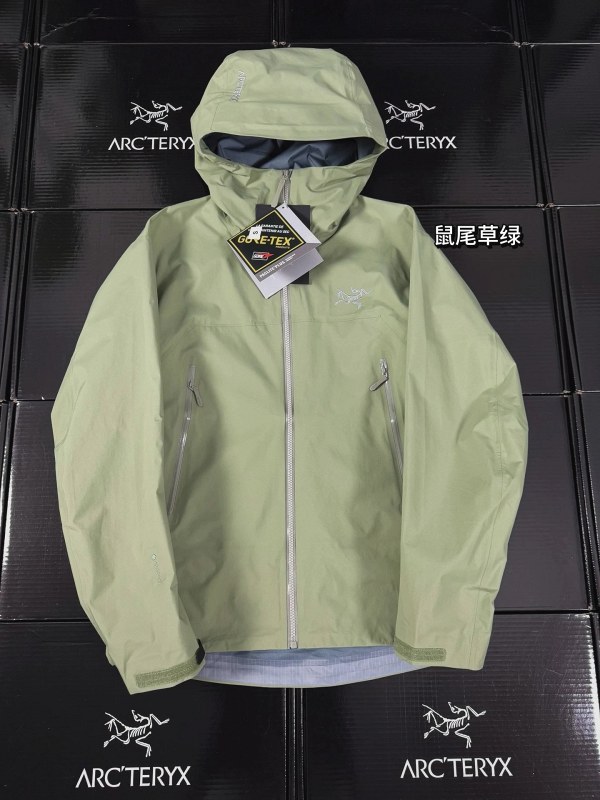
Light green is a difficult colour to sell in outerwear. It goes chalky under studio light, turns mint in direct sun, and frequently photographs better than it wears. That was the first thing our testing team wanted to settle about this shell, because the colour is the whole reason most people will stop scrolling. The second was the fabric claim, which is where the listing starts to argue with itself.
We ordered the jacket through the agent route at $141.04, down from a listed $159.65, and put it through a month of ordinary use: commutes in drizzle, two proper soakings, one long walk with a loaded backpack, and a sizing check over a fleece and a midweight base layer. Here is what held up and what we could not confirm.
What arrived, and what the listing claims
| Item | Detail |
|---|---|
| Product | Arc'teryx Green Hard-Shell Waterproof and Windproof Jacket |
| SKU | 7705102092 |
| Price paid | $141.04 (listed from $159.65) |
| Availability | In stock at time of ordering |
| Listed fabric | N40L GORE-TEX with knit backer, bluesign certified — but the same text also names Tri-Durance |
| Listed features | StormHood, VISLON front zip, WaterTight hand-pocket zippers, two-way YKK underarm vents, articulated sleeves, Velcro cuffs, high collar |
| Listed sizes | XS–XXL in one line, S–3XL in another |
The parcel arrived in a plain poly mailer, no box, and the jacket was folded flat with no hanger and no paperwork. That is normal for this channel and not a defect in the garment, but it does mean you should not expect retail packaging.
The colour and cut in daylight
The green is soft, slightly desaturated, and reads closest to a pale sage than to the saturated forest tones Arc'teryx usually puts on a Beta shell. In overcast light it looks almost grey-green; in low winter sun it lifts noticeably. Ours photographed within a shade of the supplier image, which is better than most listings manage.
The cut is the Beta family shape rather than a boxy raincoat: trim through the chest, longer at the back, with a high collar that sits against the chin when zipped. Articulated sleeves are not marketing decoration here — the elbow bend is real, and reaching forward with a backpack on does not drag the hem up. The hood is generous. With the drawcords pulled it cinches close enough to turn your head without losing peripheral vision, and the stiffened brim keeps rain off glasses.
Ventilation is the feature that earns its place
Two-way underarm zips are the difference between a shell you keep on and a shell you take off in a stairwell. We ran them half-open on a damp 12°C walk and again fully open on a warmer afternoon, and the temperature drop was immediate. The hand pockets sit slightly high, clear of a waist belt, and their zippers have that rubberised, taped feel that sheds water rather than wicking it through the teeth.
The spec sheet is where you should slow down
The listing text names N40L GORE-TEX with a knit backer and bluesign certification in one paragraph, then describes Tri-Durance fabric in the next. It also states XS–XXL and S–3XL as size ranges.
We are not able to resolve that from the outside. N40L GORE-TEX with a tricot backer is a real, well-documented specification, and the jacket's hand feel — quiet, slightly papery, no plasticky rustle — is consistent with a lightweight three-layer laminate. But "consistent with" is not "verified as". Our testing team treats a self-contradicting description as unconfirmed rather than as marketing noise, and we would want the seller to put the fabric name in writing before we treated the waterproof claim as settled.
The size conflict matters just as much. The order form asks for your height and weight, which suggests the seller is sizing you manually rather than shipping a labelled run. Supply both numbers, choose from one range, and ask which one they are actually stocking.
What independent reviews of the line do and do not tell you
There is a substantial body of published review material on the Beta lightweight shell, and it is broadly positive: three-layer protection in a package around 10.6 oz, a hood that reviewers single out, and pit zips that survive the weight-saving cuts other brands make. One durability-focused outlet scored that line's durability 4.5 out of 5, which on our five-point scale is a strong but not perfect result.
That evidence describes the design, not this listing. We found no independent buyer reviews attached to this specific SKU, and we are not going to borrow the line's reputation and present it as proof about a $141 jacket from an agent catalog.
Ownership: washing, wear and expectations
Owners in the brand's own community forums are blunt about longevity: a shell used hard can give up its water repellency within a few years rather than a decade, and regular washing is part of ownership, not optional maintenance. We washed ours once at 30°C with a technical wash and no softener. The DWR beaded again afterwards and the laminate showed no delamination at the seams. One wash proves very little, so we have marked this for the 30 and 90 day checkpoints.
On the durability question, the honest read is that this is a lightweight shell built to be carried, not a bombproof mountain layer. Buyers who want maximum abrasion resistance are consistently pointed toward the heavier Beta AR, and that advice applies here too.
Where that leaves the jacket
As a piece of clothing, this is one of the better shells we have handled at this price point. The colour is wearable beyond the trail, the fit flatters without being tight, and the ventilation and hood are genuinely functional rather than decorative. The reservations are documentary: a listing that contradicts itself on fabric and sizing, and no independent purchase history to lean on. Ask two questions before you pay — which fabric, and which size range — and the jacket you receive is likely to be the one in the photographs.
Sources and notes
We ordered the shell at $141.04, photographed and weighed the parcel on arrival, and opened it on camera with timestamps. Fit was checked over a fleece and a base layer, weather checks ran across four weeks, one wash was logged, and a written fabric question went to the seller.
-
Catalog product page
Product listing verified on 2026-11-10.
Frequently asked
Is the green lighter in person than in the photos?
It matched the supplier image closely for us — a soft, slightly grey sage that reads greener in low sun and almost grey-green under cloud. Not the saturated forest green Arc'teryx usually uses on Beta shells.
Can the underarm vents be opened with one hand?
Yes. The two-way YKK underarm zips run easily and vent heat quickly, which is the feature we used most during testing. The taped hand-pocket zippers also stay shut on a bike or in wind.
Does this jacket work as an everyday city shell?
It does. The trim cut, high collar and muted green read as normal outerwear rather than expedition kit, and the hood folds down without bulk. It has no insulation, so plan a mid-layer for cold weather.
Weigh the trade-offs
What works
- Soft sage green that photographs close to the listing image
- Real two-way pit zips, taped pocket zippers and a StormHood that cinches
- Light enough to pack, shaped well enough to wear over a base layer
Watch-outs
- Listing names both N40L GORE-TEX and Tri-Durance fabric
- Size range appears as XS–XXL in one line and S–3XL in another
- No independent buyer reviews exist for this exact listing
Could suit you
Buyers who want a light three-layer-style shell in an unusual pale green for city wear and moderate hiking, and who are comfortable confirming fabric and sizing with the seller before payment.
Consider passing if
Buyers who need documented abrasion resistance for rock and pack straps, or who will not order until the fabric specification and size range are confirmed in writing.
Hands-on score 4.2 / 5
Community feedback
0 approved
- No approved comments yet.